Arrow

feature

Slider

Also in Category...

You are browsing with label: Showing posts with label feature. Show all posts
MUMBAI: India's foreign exchange (forex) reserves decreased by $720.3 million to $292.64 billion for the week ended March 29, according to data released by the central bank.


The reserves had increased by $1.05 billion to $293.36 billion for the week ended March 22.

The foreign currency assets (FCA) - the biggest component of the forex reserves - fell by $689.4 million at $259.72 billion, according to the weekly statistical supplement released by the Reserve Bank of India (RBI).

The FCA had risen by $1.06 billion at $260.41 billion in the previous week.

The central bank said FCA in US dollar terms included the effect of appreciation or depreciation of non-US currencies held in reserve, such as the pound sterling, euro and yen.

Gold reserves value remained the same at $26.29 billion.

However, the special drawing rights (SDRs) decreased by $14.3 million to $4.32 billion during the week under review, while reserves with the International Monetary Fund (IMF) went down by $16.6 million to $2.30 billion.

The SDRs had decreased by $7.5 million to $4.34 billion during the previous week, while reserves with the IMF had went down by $4.1 million to $2.31 billion.
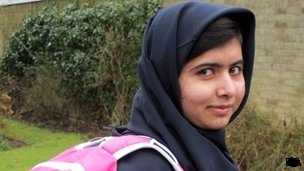
Malala Yousafzai, the Pakistani schoolgirl brought to England after being shot in the head by the Taliban, has announced the first donation from her new education charity with the support of Hollywood superstar Angelina Jolie.

Malala, who now attends Edgbaston High School for girls in Birmingham, said it was the happiest moment of her life, in a video played at the Women in the World summit in New York City.

The 15-year-old set up the Malala Fund after surviving an assassination attempt by the Taliban in October, after standing up for her right to go to school in her home country.

She spent hours undergoing major surgery at the Queen Elizabeth Hospital in Birmingham wherea surgeons tried to repair the damage caused by a bullet which grazed her brain.

The grant of 45,000 US dollars will be given to an unnamed organisation in the Swat Valley in Pakistan to support the education of 40 girls aged five to 12 who would otherwise be forced into domestic labour.

The organisation, which was not named for security reasons, will offer a safe place for the girls to study as well as financial support for their families.

In a video played to an audience of thousands she said: “Announcing the first grant of the Malala Fund is the happiest moment in my life.

“I invite all of you to support the Malala Fund and let us turn the education of 40 girls into 40 million girls.”
Hollywood actress and UN special envoy Jolie introduced the video and pledged to give 200,000 US dollars to the fund.

She praised the young girl’s courage.

“Here’s what they accomplished,” Jolie said of Malala’s attackers. “They shot her point-blank range in the head – and made her stronger. The brutal attempt to silence her voice made it stronger.”

The Malala Fund supports the education and empowerment of girls in Pakistan and around the world and provides grants to civil society organizations and individuals focused on education.

The fund is run by a board of trustees, including Malala and her family, with the support of the Vital Voices Global Partnership, founded by Hilary Clinton.

(Reuters) - Five Egyptians were killed and eight wounded in clashes between Christians and Muslims in a town near Cairo, security sources said on Saturday, in some of the worst sectarian violence in Egypt for months.Christian-Muslim confrontations have increased in Muslim-majority Egypt since the overthrow of former president Hosni Mubarak in 2011 gave freer rein to hardline Islamists repressed under his rule.
Four Christian Copts and one Muslim were killed when members of both communities started fighting and shooting at each other in El Khusus north of the Egyptian capital, the sources said. State news agency MENA put the death toll at four.
An angry crowd smashed shops belonging to Christians, residents said. A Reuters reporter saw a burned-out Coptic day care centre and several damaged shops belonging to Christian traders. An apartment inhabited by Muslims was also burned.
Residents said the violence broke out on Friday when a group of Christian children were drawing on a wall of a Muslim religious institute.
A Reuters reporter saw what looked like a swastika drawn on the wall. Muslim residents said it had offended them because it looked like a cross.
"I saw the kids drawing on the wall after afternoon prayers so I grabbed them and told them to remove what they'd just written," said Mahmoud Mahmoud al-Alfi, a Muslim resident.
Then another man arrived and started beating the children, drawing a large crowd, he said. The situation escalated when someone drew a gun and fired into the air, killing one boy with a stray bullet.
"Suddenly the area was full of weapons," Alfi said, while weeping Muslim women sat nearby in front of a house, showing pictures of a man they said had been killed during the clashes.
The president's office expressed condolences to the victims and vowed to fight any sectarian violence.
"The presidency ... totally rejects any attempt against the unity and cohesiveness of Egyptian society and will decisively confront any attempt to spark sectarian strife among Egyptian people, Muslim and Christian," according to a statement.
Muslim leaders were also quick to condemn the sectarian violence which comes as Egypt struggles with a severe economic crisis and high inflation after two years of political upheaval.
Grand Sheikh Ahmed al-Tayeb, of Egypt's leading Islamic authority Al-Azhar, urged measures to prevent the situation from escalating and to "preserve the national character which characterises the Egyptian people, Muslims and Christians," MENA said.
"The sectarian riots which happened in El Khusus are unacceptable and grave," Saad al-Katatni, the head of the Muslim Brotherhood political party, said on his Facebook website. "There are some who want to set Egypt ablaze and create crises."
President Mohamed Mursi, a Brotherhood leader elected in June, has promised to protect the rights of Copts, who make up about 10 percent of Egypt's 84 million people.
TIGHT SECURITY
On Saturday the situation was calm but tense in the small town where Muslims and Christians live close to each other but in separate streets. Security was tight with police vehicles parked in the main streets.
Police detained 15 people, a security source said.
In a Christian neighbourhood dozens of angry young men gathered at noon on Saturday, chanting "with our blood and soul we sacrifice ourselves for the cross". The crowds left after a priest came and asked them to leave to calm tensions.
"There are people who want to cause sectarian strife between Muslims and Christians," said a Christian man who gave his name as Kameel. "I've been here longer than 30 years and I have never seen any violence or extremism in our area."
Sectarian tensions have often flared into violence, particularly in rural areas where rivalries between clans or families sometimes add to friction. Love affairs between Muslims and Christians have also sparked clashed in the past.
Since Mubarak was ousted by a popular uprising, Christians have complained of several attacks on churches by radical Islamists, incidents that have sharpened longstanding Christian complaints about being sidelined in the workplace and in law.
As an example, they point to rules that make it harder to obtain official permission to build a church than a mosque.
Last month, a court sentenced a Muslim to death for killing two people in a dispute with Christians in a southern town.
In October 2011, 25 people, most of them Coptic demonstrators, were killed in clashes with troops in Cairo.
Sorce:
The pain could be due to uterine contractions (abnormal at this stage), or some problem related to the intestines. Please consult your gynecologist immediately – a physical exam is a must to diagnose possible cause of pain and whether or not you need admission or photolytic therapy (to stop uterine contractions).
It’s normal to feel some abdominal discomfort during pregnancy, but it can be hard to determine when it’s time to head to your health care provider to get checked out. Severe and consistent abdominal pain needs immediate attention. If pain or cramping is accompanied by bleeding, fever, changes in vaginal discharge, light-hardheadedness, urinary irritation, or nausea, then you should contact your health care provider as soon as possible.
In the first 20 weeks, abdominal pain could be a warning signal for a couple of serious conditions:
  • Ectopic pregnancy is the first problem that you’ll want to rule out because it can be fatal. An ectopic pregnancy occurs when the fertilized egg implants outside of the uterus, in the fallopian tube, ovaries, abdomen or the cervix. If you have an ectopic pregnancy, you will probably feel abdominal pain before you even know your pregnant because it will usually present itself anywhere from 4-7 weeks gestation. Sometimes a pregnancy test will give you a negative result when you have an ectopic pregnancy. Symptoms of an ectopic pregnancy include: bleeding or spotting, pain in the abdomen, back, shoulders or neck, dizziness and low blood pressure. The pain might become worse during bowel movements or physical activity. If you start to experience symptoms of shock accompanied with heavy bleeding, call 911 immediately.
  • Miscarriage is the loss of a pregnancy within the first 20 weeks. Signs of miscarriage are: spotting, bleeding, passing tissue or clots, pain and cramping in the lower abdomen, persistent lower back pain and the absence of pregnancy symptoms. The symptoms might be hard to recognize because they can present themselves over a period of a couple days. Severe bleeding needs medical attention immediately. Otherwise, call your health care provider if you exhibit symptoms of a miscarriage.
Throughout your pregnancy abdominal pain can often be caused by normal bodily functions:
  • Small periods of cramping before or during an orgasm are normal and do not warrant medical attention.
  • Gas pains are more common during pregnancy because digestion is slowed and there is more pressure on the stomach and intestines.
  • Constipation pain is also common during pregnancy. The growing uterus puts pressure on the rectum and slower digestion contributes to constipation. This pressure can also cause a Bowel obstruction, which requires medical attention.
During pregnancy, some causes of abdominal pain are related to the pregnancy and may or may not require medical attention:
  • Round Ligament stretching around the abdomen occurs because as the pregnancy progresses, the ligaments stretch and become thicker. Short, stabbing pains commonly occur during the second trimester in response to movement. If the pain lingers after movements, you should contact a health care professional.
  • Braxton Hicks contractions are common in mid to late pregnancy and act as “preparation exercises” for the uterus before giving birth. They are typically irregular and painless before 37 weeks.
  • If contractions become painful or come in closer intervals before 37 weeks, then it could be a sign of premature labor. Premature labor is often accompanied by some vaginal discharge, possibly bloody mucus. You might also experience cramping and lower back pain. Get in touch with a medical professional if you suspect premature labor; it can sometimes be stopped.
There are also serious pregnancy complications that can cause abdominal pain throughout pregnancy:
  • Preeclampsia is a common condition of pregnancy that is identified by a rise in blood pressure and protein in the urine. It’s unknown what the cause is. Swollen face, hands, feet and ankles can point to preeclampsia. Severe preeclampsia can cause intense abdominal pain often accompanied by nausea, vomiting, headache, and problems with your vision. Preeclampsia requires immediate medical attention and consistent monitoring until you give birth.
  • Placental Abruption is the separation of the placenta from the uterus partially or completely. Bleeding or light spotting is the most apparent symptom. It can cause abdominal tenderness, back pain, contractions or one long, hard contraction of the uterus. Placental abruption needs treatment immediately.
Pregnant or not, there are causes of abdominal pain that all require medical attention:
  • Stomach viruses
  • Kidney stones (more common during pregnancy)
  • Food poisoning
  • Gallbladder issues (more common during pregnancy)
  • Appendicitis
  • Hepatitis or problems of the liver
  • Problems with the pancreas (more common during pregnancy)
  • Urinary tract infection (more common during pregnancy)
If you experience any abdominal pain during pregnancy and don’t know what the cause is, you should contact your health care provider. Do not panic if you experience abdominal pain – often times the cause of pain during pregnancy is not serious but it’s better to take a cautious approach. A health professional will be able to help you narrow down the possible causes and give you the attention you need should the situation become serious.
Missed periods and light bleeding
Not all women experience a missed period in those early weeks after conception – this is not only be confusing, but can lead to miscalculated due dates and worry that the pregnancy may not continue.
A few women will experience what is called an ‘implantation bleed’ instead of a normal period, even though they have conceived a baby.
This is where a light bleed occurs as the growing baby burrows into the lining of their mother’s uterus, usually about 12 days after the egg has been fertilised, or ‘conceived’ in the fallopian tube.
An implantation bleed will typically occur just before, or around the time, the next period would have been due. However, it is usually not as heavy, or as long as a normal period.
Doctors or midwives will usually try and find out if a woman’s last ‘period’ was normal, to avoid calculating the baby’s due date from an implantation bleed, which would miscalculate the baby’s due date at about 3 to 4 weeks later.
Occasionally, a woman will continue to have a small, red or pinkish vaginal loss for a day or so around the time that their period would have been due, for example at around 4, 8, 12 and 16 weeks of the pregnancy.
This is more common during early pregnancy, but can persist into later pregnancy as well.
Some women will experience bright spotting (fresh bleeding), or brown spotting (bleeding that happened a day or so ago), at some stage during their pregnancy. This may appear as a heavy bleed, like a period, or like a ‘light period’ or simply as something small which is noticed when wiping herself after going to the toilet.
About 50% of women who experience bleeding during the first 12 weeks of their pregnancy will continue to experience a normal pregnancy.
Spotting after intercourse is often the result of the increased sensitivity of your cervix to any kind of minor bumping or irritation. After the first trimester; spotting is less likely to occur, and even if it does, it’s still not necessarily an ominous sign. If you feel cramps in your abdomen (the area around your stomach), don’t panic right away. Sometimes cramping is nothing more than a gentle reminder to take it easy, and at other times it might be a sign of digestive problems. Occasionally, however, cramping can be an emergency signal that says you need medical attention.
Take It Easy
The muscles and ligaments that support your uterus are being pulled and stretched in all directions during pregnancy. This can cause occasional cramping. The pain might be mild or sharp. It might be particularly noticeable when you make a quick move, get up out of a chair, cough, or sneeze. This is nothing to worry about. Some women get cramps when they exercise and put additional stress on muscles and ligaments that are already strained. If you feel cramps while exercising, listen to your body. Stop and rest. This is not the time to work through pain.
Cramps can also remind you to watch what you eat. As in your prepregnancy days, poor digestion will cause cramps. If you overeat or eat the wrong foods, you might feel stomach cramps. If you are constipated, you will feel cramps that can be very painful.
Warning
Sometimes cramps are a danger signal that shouldn’t be ignored. There are three specific medical conditions that are usually accompanied by cramping:
Miscarriage. About 20 percent of all pregnancies end in a miscarriage within the first three months of pregnancy. (Miscarriage is the delivery of a baby before it is developed enough to survive outside the womb.) Severe cramping in the first trimester (often accompanied by bleeding from the vagina) can signal trouble. If you feel constant abdominal pain (with or without bleeding), call your doctor right away.    Ectopic pregnancy. When the fertilized egg settles somewhere outside the uterus, you will get a positive pregnancy test, but as the egg begins to grow it cannot survive and will cause sharp abdominal pains and bleeding.
Preterm labor. Each year, hundreds of thousands of babies are born long before they are due. These babies announce their plans for an early entrance with a variety of signals that include cramping.
If your cramps are severe and/or persistent, call your doctor immediately.
The second day of the Lux Cozi TOIFA celebrations, leading up to the grand finale in Vancouver, saw notable names from Bollywood and quotable quotes by them becoming the highlight of the evening.

A vibrant extravaganza by designer Manish Malhotra celebrated 100 years of Indian cinema and the trendsetting fashion in Hindi films over the decades, with Urmila Matondkar, Raveena Tandon, Neha Dhupia, Nargis Fakhri and Sonal Chauhan turning showstoppers. The evening saw technical awards being given across 12 categories. 


Award                                             Winner                                         Film
Best Editing                                  Namrata Rao                                   Kahaani
Best Cinematography                   S Ravi Varman                                 Barfi
Best Choreography                    Ganesh Acharya -                             Chikni Chameli     Agneepath
Best Special Effects                   Kvsanjit, Rajiv Ghosh                         Raaz 3
Best Costume Design               Aki Narula, Shafalina                           Barfi
Best Art Direction                        Rajat Podar                                     Barfi
Best Action                               Conrad Palmisano, Markos               Ek Tha Tiger
Best Background Score                   Pritam                                          Barfi
Best Sound Recording             Anita Khushwaha                                  Talaash
Best Story                             Advaita Kala, Sujoy Ghosh                    Kahaani
Best Screenplay                         Sujoy Ghosh                                     Kahaani
Best Dialogue                     Anurag Kashyap, Akhilesh Jaiswal,        
Gangs of Wasseypur I
                                              Zeishan Quadri, Sachin Ladia    


JOHANNESBURG (Reuters) - Trying to prevent HIV infection through vaginal gels or daily tablets has proven ineffective in the southern African region ravaged by the disease because people did not use the medicines properly, a study released on Monday said.
A ground-breaking study issued in 2010 indicated a vaginal gel containing an HIV drug can sharply reduce infections in women who use it before and after sex.
However, a test of the gel and two types of anti-HIV pills among more than 5,000 women in South Africa, Zimbabwe and Uganda showed that, based on blood tests, more than 70 percent did not use the medication as instructed.
"We are obviously disappointed in the results. We were very hopeful that these products, which we know have been effective in other studies and clearly have a lot of promise, would work," Jeanne Marrazzo, a researcher on the project for the University of Washington, told reporters in a teleconference.
"Women did not use consistently any of the products. Adherence was very low," said Marrazzo, part of the project known as the Vaginal and Oral Interventions to Control the Epidemic (VOICE).
HIV/AIDS experts said the results showed how important a factor human behavior is when devising ways to prevent HIV.
"HIV prevention is never just biomedical - behavior is key. What we've learned from VOICE and other trials is that adherence to the prescribed dose - the behavioral component - is the variable that determines effectiveness," said Mitchell Warren, director of the HIV prevention advocacy group AVAC.
East and southern Africa are the areas most heavily affected by the HIV epidemic. Out of the total number of people worldwide in 2009 living with HIV, 34 percent were in 10 countries of southern Africa, according to the U.N. Programme on HIV/AIDS.
Experts have been searching for years for inexpensive, safe and simple medications to decrease the risk of transmission among a population that is largely destitute and with little access to quality health care.
The study also found the group most likely to contract HIV - unmarried women under 25 - was also the most likely not to use any of the medicines. The results were presented at a Conference on Retroviruses and Opportunistic Infections in Atlanta.
The three-year study that started in September 2009 tested a daily tablet called Truvada, which was approved for HIV prevention in July 2012 by the U.S. Food and Drug Administration after it was shown to significantly reduce the risk of HIV infection when used as a preventative measure.
The gel with a drug called tenofovir, which a previous study showed reduced HIV infections in women by 39 percent over two and a half years, and an oral tenofovir tablet were also tested.
Researchers have been trying for years to formulate a microbicide - a gel, cream, ring or tablet inserted into the vagina or rectum before sex to prevent transmission of the human immunodeficiency virus (HIV) that causes AIDS.
"We need to rethink the design of these intervention trials ... in healthy people because it is difficult for anybody to take a pill or anything every day, particularly when you are healthy and do not feel that you need a drug," said Marrazzo.
Truvada is made by Gilead Sciences, which also developed tenofovir. In 2006, Gilead assigned a royalty-free license for tenofovir gel to CONRAD.
Jonathan Mermin, an HIV/AIDS prevention expert at the U.S. Centers for Disease Control and Prevention (CDC) said these trial results underscored the complexities of getting healthy people to use preventative measures against HIV.
"Clinicians and public health professionals will have to further assess and better understand how to promote and support the high levels of adherence necessary," he said.
(Additional reporting by Kate Kelland in London; Editing by Louise Ireland and Michael Roddy)

Followers